

Autonomous vehicles are cars that can drive themselves without human intervention. They use sensors, cameras, radar, and artificial intelligence to perceive their surroundings and make driving decisions. Autonomous vehicles have different levels of automation, ranging from partial to full.
The history of autonomous vehicles dates back to the 1920s, when Francis Houdina, an electrical engineer from New York, demonstrated a radio-controlled car on the streets of Manhattan. However, the first self-sufficient and truly autonomous cars appeared in the 1980s, with projects from Carnegie Mellon University, Mercedes-Benz, and others. Since then, many companies and research organizations have developed and tested autonomous vehicles, such as Tesla, Google, Ford, and Audi.
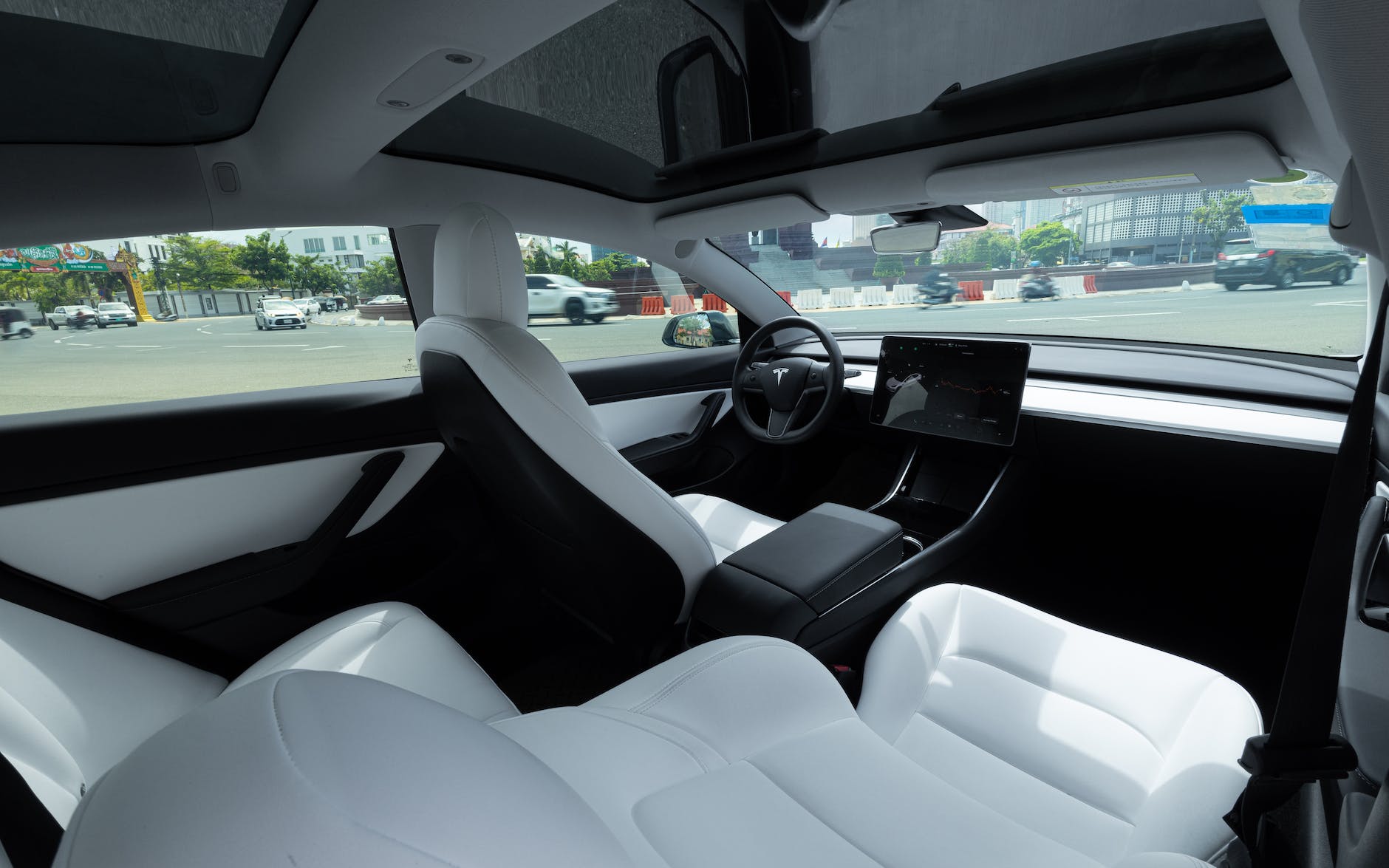
Autonomous vehicles work by creating and maintaining a map of their surroundings based on various sensors situated in different parts of the car. These sensors include radar, lidar, optical cameras, and ultrasonic sensors. The data from the sensors is processed by a computer system, which then decides how to operate the vehicle. The system uses hard-coded rules, obstacle avoidance algorithms, predictive modeling, and object recognition to follow traffic rules and navigate obstacles.
Autonomous vehicles are expected to offer many benefits for safety, mobility, efficiency, and convenience. However, they also pose many challenges and risks that need to be addressed before they can be widely deployed on public roads. One of the main challenges is how to ensure that autonomous vehicles are safe and reliable in all driving situations and environments. Autonomous vehicle safety is evaluated in two ways: through data from autonomous vehicle testing and through observation of autonomous vehicles on public roads. Data from autonomous vehicle tests can help us understand how autonomous vehicles respond to different driving scenarios and their reliability when avoiding collisions. Observation of autonomous vehicles on public roads can help us assess their performance and impact on traffic flow, human drivers, pedestrians, cyclists, and other road users.
According to some studies and reports, autonomous vehicles have the potential to reduce traffic accidents and fatalities significantly by eliminating human error, which is the main cause of most crashes. However, much of the data on autonomous vehicle safety comes from Western states of the U.S., often in good weather and on unidirectional, multi-lane highways. More data is needed to evaluate how autonomous vehicles perform in different weather conditions, road types, traffic patterns, cultural contexts, and ethical dilemmas. Moreover, autonomous vehicles may introduce new types of risks and vulnerabilities, such as cyberattacks, system failures, legal liability issues, ethical trade-offs, and social acceptance problems.
Therefore, autonomous vehicle safety is a complex and evolving topic that requires continuous research, development, testing, regulation, and education. The level of safety to be ensured by autonomous vehicles is defined as “an automated vehicle shall not cause any non-tolerable risk”, meaning that automated vehicle systems shall not cause any traffic accidents resulting in injury or death that are reasonably foreseeable and preventable.
Sources:
- https://www.techopedia.com/definition/30056/autonomous-vehicle
- https://en.wikipedia.org/wiki/History_of_self-driving_cars
- https://www.tomsguide.com/reference/how-do-self-driving-cars-work-everything-you-need-to-know
- https://www.datamyte.com/autonomous-vehicle-safety/
- https://unece.org/fileadmin/DAM/trans/doc/2019/wp29/WP29-177-19e.pdf


